
I. Primary Application Environments of Explosion-Protected Motors
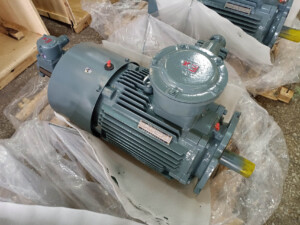
Explosion-protected motors are mainly used in hazardous locations where flammable and explosive gases, vapors, or dusts are present. Key application scenarios include:
Oil, Gas and Chemical Industry: Oil fields, refineries, chemical plants, oil and gas storage tank farms, LNG/LPG facilities, etc.
Coal Mining and Mineral Extraction: Underground coal mines (methane gas environments), crushing and screening workshops in metal/non-metal mines (coal dust, metal dust environments).
Grain, Wood and Building Materials Processing: Flour mills, starch factories, sawmills, furniture factories, cement plants, etc. (combustible dust environments).
Spraying and Printing Industry: Paint booths, ink workshops (organic solvent vapor environments).
Other Special Locations: Military ammunition depots, ship oil tanks, biomass power plants, sewage treatment plants (biogas environments).
II. How Do Explosion-Protected Motors Achieve Explosion Protection?
The core principle of explosion-protected motors is to eliminate the possibility of the motor acting as an “ignition source”, which is mainly realized through the following technologies:
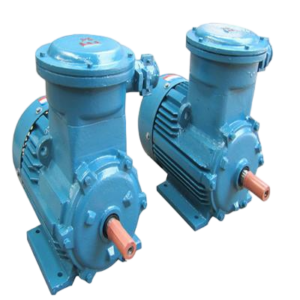
1. Flameproof Type (Ex d) – Most Commonly Used
◎ Principle: Physically isolate the interior of the motor from the external hazardous environment. A high-strength housing is used to withstand internal explosion pressure, and the precisely designed joint gap cools the internal flame, preventing it from igniting external flammable and explosive substances.◎ Features: Allows internal explosions but suppresses their propagation, with high safety, suitable for Zone 1 and Zone 2, the highest-risk locations.
2. Increased Safety Type (Ex e) – Prevention-Focused
◎ Principle: Through measures such as enhanced insulation, increased electrical clearance, and controlled temperature rise, ensure that the motor does not generate sparks, arcs, or dangerous high temperatures during normal operation.◎ Features: Focuses on prevention, with a relatively simple structure, suitable for Zone 2, lower-risk locations.
3. Pressurized Type (Ex p) – Active Defense
◎ Principle: Continuously inject clean air or nitrogen into the motor housing, maintaining the internal pressure higher than the external environment to form an air curtain barrier, preventing external flammable and explosive gases from entering.◎ Features: Requires a continuous gas supply and pressure monitoring system, commonly used for large, complex equipment.
4. Intrinsically Safe Type (Ex i) – Energy Limitation
◎ Principle: Starting from circuit design, limit voltage, current, and energy to extremely low levels, ensuring that any sparks or thermal effects generated are insufficient to ignite the surrounding explosive mixture.◎ Features: The highest safety level, mainly used for low-voltage control circuits.